Beef Nihari (Slow-Cooked Pakistani Stew)
- Serves: 6 People
- Prepare Time: 20 minutes
- Cooking Time: 4 hours
- Calories: 540
- Difficulty: Medium
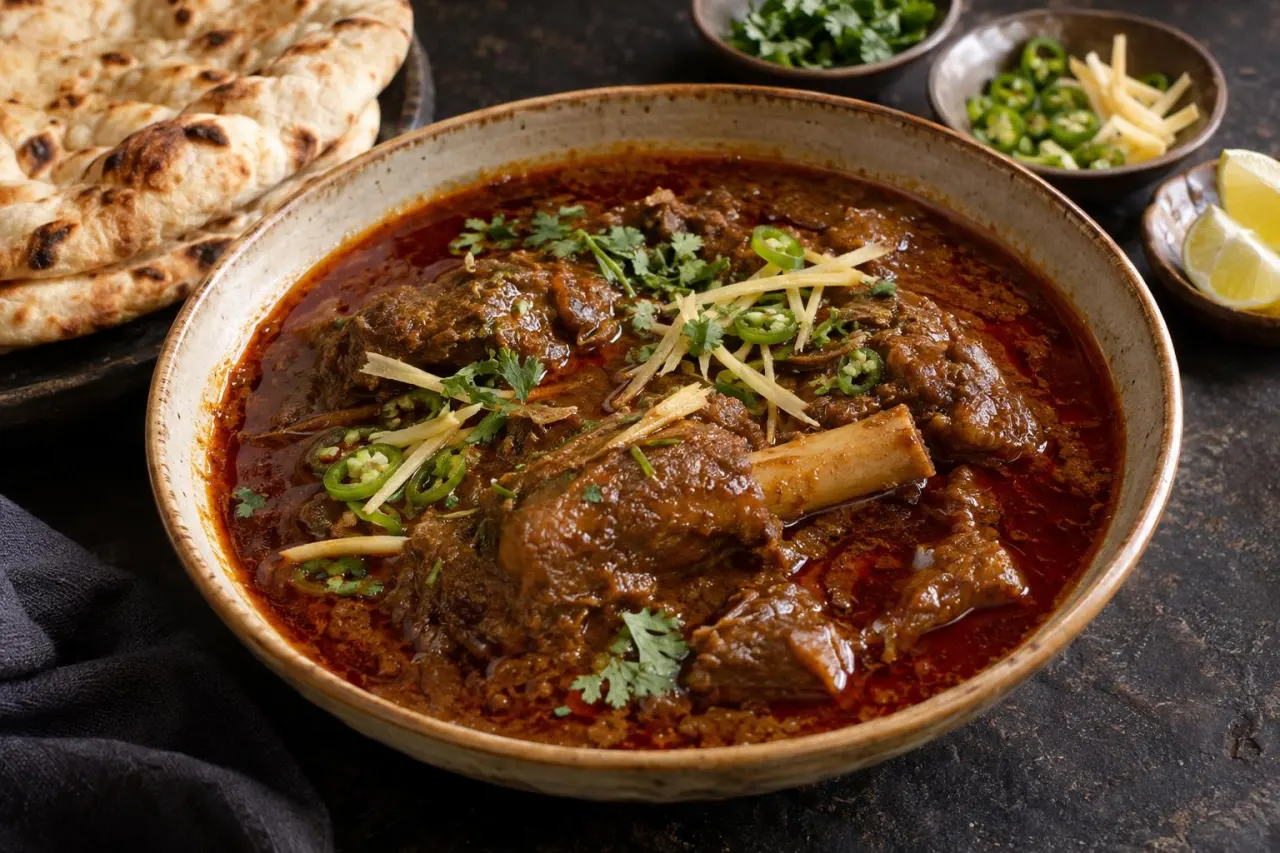
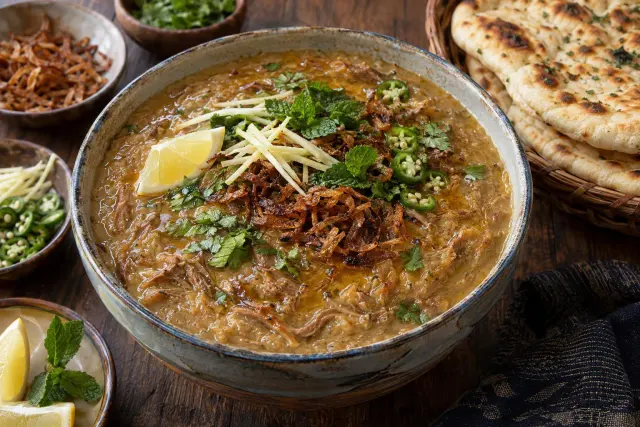
Beef nihari is the slow-cooked stew Old Delhi's cooks brought to Karachi, and today it is one of Pakistan's best-loved dishes. Tender beef shank is cooked for hours in a silky, deeply spiced gravy, then finished at the table with ginger, green chillies, coriander and lemon. In Karachi and Lahore it is eaten for breakfast with fresh naan; in Pakistani homes in the UK, US and the Gulf it is the classic weekend and Eid dish.
The flavour comes from a homemade nihari masala of fennel, dried ginger, long pepper and warm spices, and from time. Beef shank with the bone, or a mix of shank and bone marrow, gives the gravy its body. This recipe gives stovetop timings plus slow cooker and pressure cooker options, so you can make it on a busy weeknight or leave it to cook gently overnight.
The gravy is thickened at the end with a little toasted atta (wholemeal flour) mixed with water, which gives nihari its glossy, velvety texture. Ask your butcher for beef shin or shank; in the US, bone-in beef shank is easy to find. Serve with naan, ginger, chillies and lemon on the side.
Ingredients tap to tick off
Directions tap a step when done
- Make the nihari masala: dry-roast all the whole masala spices in a pan for 1 to 2 minutes until fragrant, cool, then grind to a fine powder with the dried ginger and nutmeg.
- Heat the oil in a large heavy pot and fry the sliced onion for 10 to 12 minutes until golden brown. Lift out half of the onions and set aside for garnish.
- Add the beef and marrow bones and sear on high heat for 5 minutes. Add the ginger-garlic paste, salt, chilli powder, turmeric and 2 tablespoons of the nihari masala, and fry for 3 to 4 minutes.
- Pour in the water, bring to a boil, then cover and simmer on the lowest heat for 3½ to 4 hours until the meat is very tender. (Slow cooker: 8 hours on low. Pressure cooker: 50 minutes at high pressure.)
- Dry-roast the atta in a small pan for 2 to 3 minutes until it smells nutty, cool slightly, then whisk with 1 cup (240 ml) of water into a smooth paste.
- Stir the flour paste into the nihari a little at a time and simmer for 15 to 20 minutes, stirring often, until the gravy is thick and glossy. Stir in the remaining nihari masala.
- Let it rest for 5 minutes until a layer of oil rises to the top. Ladle into bowls with plenty of oil and gravy.
- Garnish with the fried onions, ginger, green chillies and coriander, and serve with lemon wedges and naan.
Cooked it? Rate this recipe
Be the first to rate it.
Frequently asked questions
Which cut of beef is best for nihari?
Bone-in beef shank or shin. It has the connective tissue that melts into a rich, sticky gravy during the long cook. Boneless chuck works too but gives a thinner gravy.
Can I use shop-bought nihari masala?
Yes. Use about 3 tablespoons of a Pakistani brand such as Shan or National and reduce the salt and chilli, as these mixes already contain both.
Can I make nihari with lamb or mutton?
Yes. Use bone-in lamb shoulder or shank and reduce the cooking time to about 2½ hours.
Does nihari freeze well?
Very well. Freeze it without the fresh garnish for up to 3 months and reheat gently, adding a splash of water if the gravy has thickened.
Beef Nihari (Slow-Cooked Pakistani Stew)
- Serves: 6 People
- Prepare Time: 20 minutes
- Cooking Time: 4 hours
- Calories: 540
- Difficulty: Medium
Beef nihari is the slow-cooked stew Old Delhi's cooks brought to Karachi, and today it is one of Pakistan's best-loved dishes. Tender beef shank is cooked for hours in a silky, deeply spiced gravy, then finished at the table with ginger, green chillies, coriander and lemon. In Karachi and Lahore it is eaten for breakfast with fresh naan; in Pakistani homes in the UK, US and the Gulf it is the classic weekend and Eid dish.
The flavour comes from a homemade nihari masala of fennel, dried ginger, long pepper and warm spices, and from time. Beef shank with the bone, or a mix of shank and bone marrow, gives the gravy its body. This recipe gives stovetop timings plus slow cooker and pressure cooker options, so you can make it on a busy weeknight or leave it to cook gently overnight.
The gravy is thickened at the end with a little toasted atta (wholemeal flour) mixed with water, which gives nihari its glossy, velvety texture. Ask your butcher for beef shin or shank; in the US, bone-in beef shank is easy to find. Serve with naan, ginger, chillies and lemon on the side.
Ingredients
Directions
- Make the nihari masala: dry-roast all the whole masala spices in a pan for 1 to 2 minutes until fragrant, cool, then grind to a fine powder with the dried ginger and nutmeg.
- Heat the oil in a large heavy pot and fry the sliced onion for 10 to 12 minutes until golden brown. Lift out half of the onions and set aside for garnish.
- Add the beef and marrow bones and sear on high heat for 5 minutes. Add the ginger-garlic paste, salt, chilli powder, turmeric and 2 tablespoons of the nihari masala, and fry for 3 to 4 minutes.
- Pour in the water, bring to a boil, then cover and simmer on the lowest heat for 3½ to 4 hours until the meat is very tender. (Slow cooker: 8 hours on low. Pressure cooker: 50 minutes at high pressure.)
- Dry-roast the atta in a small pan for 2 to 3 minutes until it smells nutty, cool slightly, then whisk with 1 cup (240 ml) of water into a smooth paste.
- Stir the flour paste into the nihari a little at a time and simmer for 15 to 20 minutes, stirring often, until the gravy is thick and glossy. Stir in the remaining nihari masala.
- Let it rest for 5 minutes until a layer of oil rises to the top. Ladle into bowls with plenty of oil and gravy.
- Garnish with the fried onions, ginger, green chillies and coriander, and serve with lemon wedges and naan.
You may also like
More like this: Beef & Mutton 4 Pakistani Breakfast 2

I learned to cook beside my mother and grandmother. After years in Saudi Arabia and the UAE, where friends kept asking me for a proper karahi or biryani, I started PakistanRecipes.com to share authentic Pakistani home cooking, written for kitchens anywhere in the world.