Mutton Korma (Pakistani Shadi Style)
- Prep20 min
- Cook1 hr 40 min
- Total2 hr
- Serves6
- Calories520 kcal
- LevelMedium
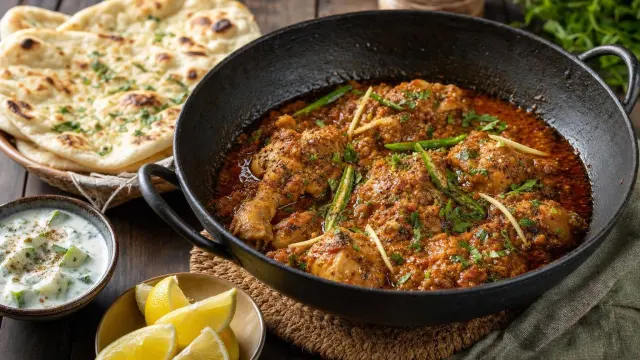
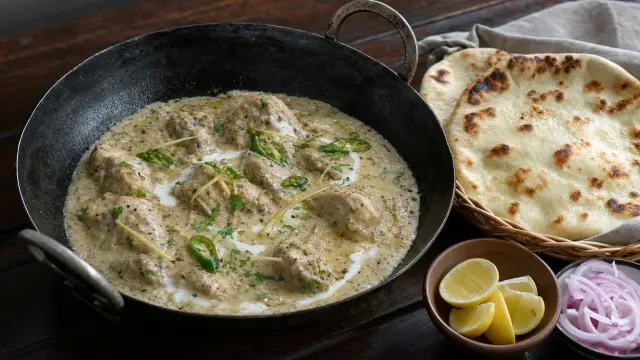
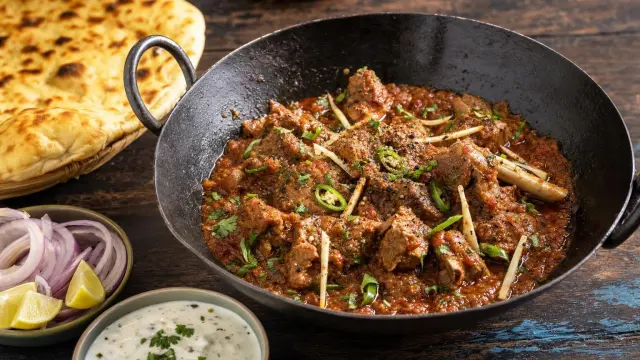
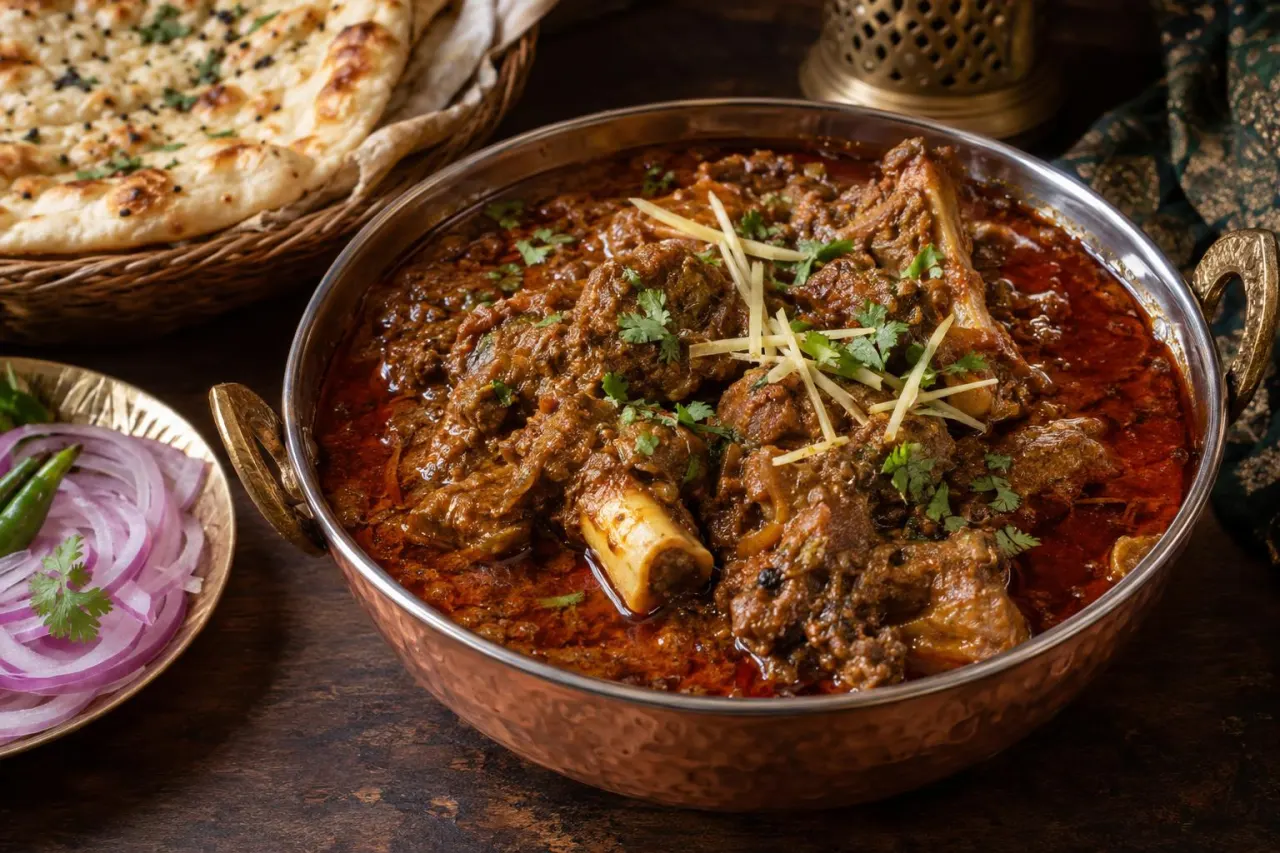
Mutton korma is the centrepiece of a Pakistani wedding meal (shadi ka khana): tender pieces of goat or lamb in a rich, glossy gravy of fried onions, yoghurt and whole spices, with a layer of spiced oil on top and the scent of kewra and cardamom. It is nothing like the mild, creamy, coconut korma on many UK and US restaurant menus. Pakistani korma is deep brown, aromatic and medium-hot, and it has no cream at all.
The flavour comes from one ingredient done properly: birista, onions fried slowly until deep golden brown, then crushed into a paste with yoghurt. That paste gives the korma its colour, sweetness and body. The meat is browned with whole spices and ginger-garlic, then simmered slowly until it is soft enough to pull apart with a piece of naan.
Use bone-in goat (mutton in Pakistan) or lamb shoulder from a halal butcher. Serve mutton korma with naan, sheermal or plain basmati rice, and make it a day ahead if you can: like most curries, it tastes even better the next day.
Ingredients tap to tick off
Directions tap a step when done
- Heat the oil in a heavy pot and fry the onions on medium heat, stirring often, for 15 to 18 minutes until evenly deep golden brown. Lift them out with a slotted spoon, spread on kitchen paper and let them crisp.
- Blend or crush the fried onions with the yoghurt into a smooth paste. Set aside.
- Reheat the same oil and add the whole spices. When they crackle, add the meat and fry on high heat for 6 to 8 minutes until browned on all sides.
- Add the ginger and garlic pastes and cook for 2 minutes. Add the salt, both chilli powders, ground coriander and turmeric with a splash of water and fry for 3 to 4 minutes until the oil separates (bhunai).
- Stir in the onion-yoghurt paste and cook for 5 minutes, stirring, until the masala darkens and the oil rises again.
- Add 2 cups of hot water, bring to the boil, then cover and simmer on low heat for 60 to 75 minutes (lamb) or 75 to 90 minutes (goat), until the meat is very tender. Add a little more hot water if it gets too dry.
- Uncover and cook on medium heat for 5 minutes until the gravy is thick and a layer of oil floats on top.
- Stir in the garam masala, nutmeg-mace and kewra water. Cover and leave on the lowest heat for 5 minutes (dum).
- Garnish with fresh coriander and ginger strips and serve with naan or rice.
Cooked it? Rate this recipe
Be the first to rate it.
Frequently asked questions
What is the difference between Pakistani and restaurant korma?
Pakistani mutton korma gets its body from fried onions and yoghurt and is aromatic and medium-hot. Many UK and US restaurant kormas are mild and sweet with cream, coconut or ground nuts.
Can I use lamb instead of goat?
Yes. In Pakistan mutton usually means goat, but lamb shoulder works very well and cooks a little faster.
Can I make mutton korma in a pressure cooker or Instant Pot?
Do all the frying steps first, then add 1½ cups of water and pressure cook for 25 minutes (lamb) or 30 to 35 minutes (goat). Release the pressure, then cook uncovered until the oil separates.
Why does my korma taste bitter?
The onions were burnt rather than deep golden. Fry them on medium heat and lift them out as soon as they are evenly brown; they keep darkening for a minute after.
Mutton Korma (Pakistani Shadi Style)
- Serves: 6 People
- Prepare Time: 20 minutes
- Cooking Time: 100 minutes
- Calories: 520
- Difficulty: Medium
Mutton korma is the centrepiece of a Pakistani wedding meal (shadi ka khana): tender pieces of goat or lamb in a rich, glossy gravy of fried onions, yoghurt and whole spices, with a layer of spiced oil on top and the scent of kewra and cardamom. It is nothing like the mild, creamy, coconut korma on many UK and US restaurant menus. Pakistani korma is deep brown, aromatic and medium-hot, and it has no cream at all.
The flavour comes from one ingredient done properly: birista, onions fried slowly until deep golden brown, then crushed into a paste with yoghurt. That paste gives the korma its colour, sweetness and body. The meat is browned with whole spices and ginger-garlic, then simmered slowly until it is soft enough to pull apart with a piece of naan.
Use bone-in goat (mutton in Pakistan) or lamb shoulder from a halal butcher. Serve mutton korma with naan, sheermal or plain basmati rice, and make it a day ahead if you can: like most curries, it tastes even better the next day.
Ingredients
Directions
- Heat the oil in a heavy pot and fry the onions on medium heat, stirring often, for 15 to 18 minutes until evenly deep golden brown. Lift them out with a slotted spoon, spread on kitchen paper and let them crisp.
- Blend or crush the fried onions with the yoghurt into a smooth paste. Set aside.
- Reheat the same oil and add the whole spices. When they crackle, add the meat and fry on high heat for 6 to 8 minutes until browned on all sides.
- Add the ginger and garlic pastes and cook for 2 minutes. Add the salt, both chilli powders, ground coriander and turmeric with a splash of water and fry for 3 to 4 minutes until the oil separates (bhunai).
- Stir in the onion-yoghurt paste and cook for 5 minutes, stirring, until the masala darkens and the oil rises again.
- Add 2 cups of hot water, bring to the boil, then cover and simmer on low heat for 60 to 75 minutes (lamb) or 75 to 90 minutes (goat), until the meat is very tender. Add a little more hot water if it gets too dry.
- Uncover and cook on medium heat for 5 minutes until the gravy is thick and a layer of oil floats on top.
- Stir in the garam masala, nutmeg-mace and kewra water. Cover and leave on the lowest heat for 5 minutes (dum).
- Garnish with fresh coriander and ginger strips and serve with naan or rice.
You may also like
More like this: Curry & Handi 5

I learned to cook beside my mother and grandmother. After years in Saudi Arabia and the UAE, where friends kept asking me for a proper karahi or biryani, I started PakistanRecipes.com to share authentic Pakistani home cooking, written for kitchens anywhere in the world.